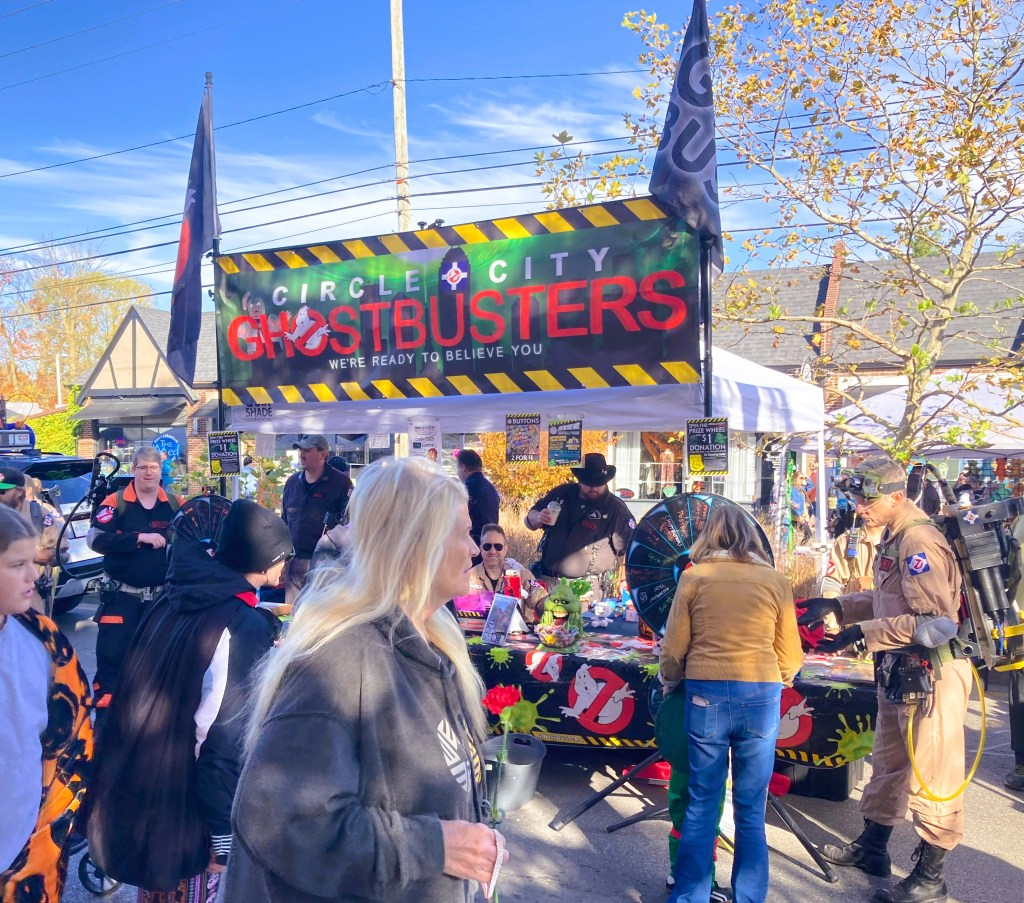
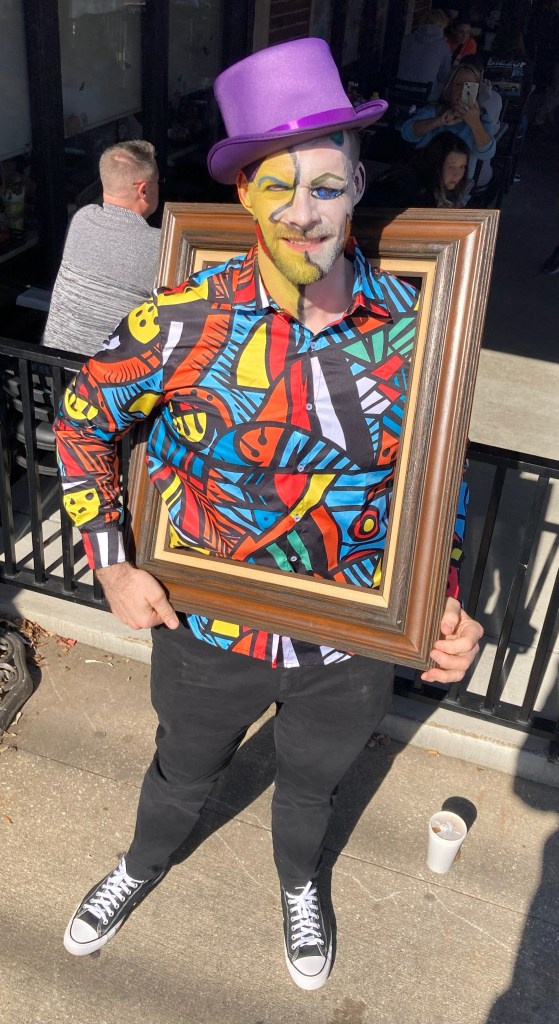
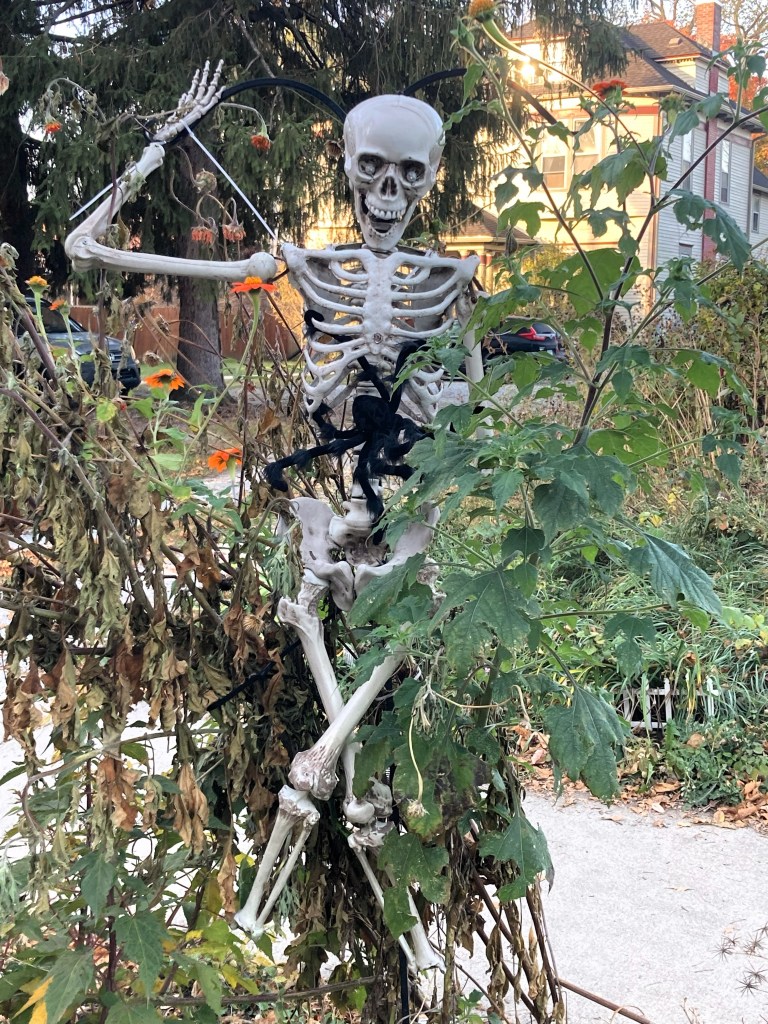
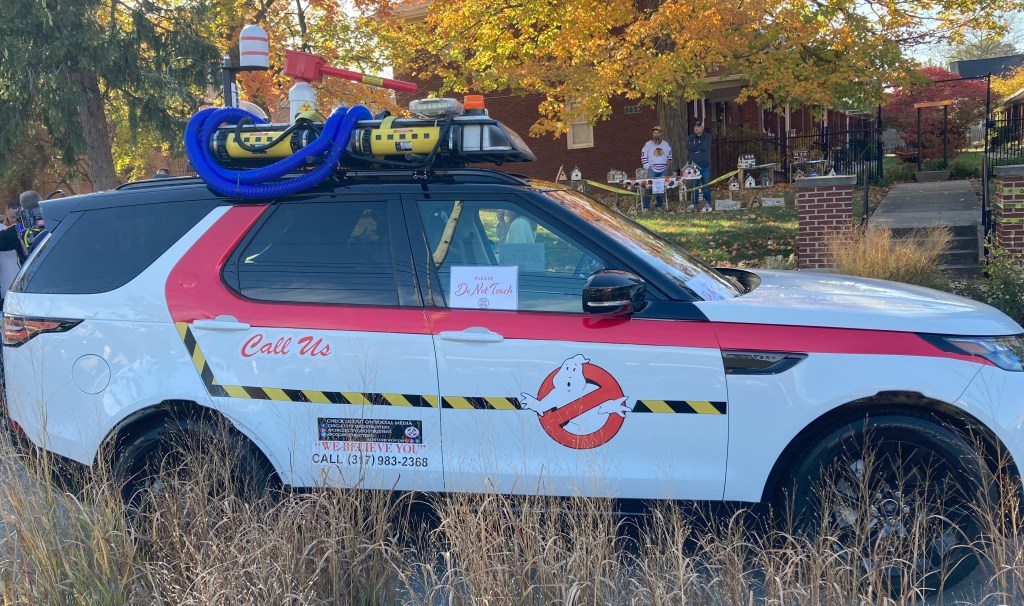
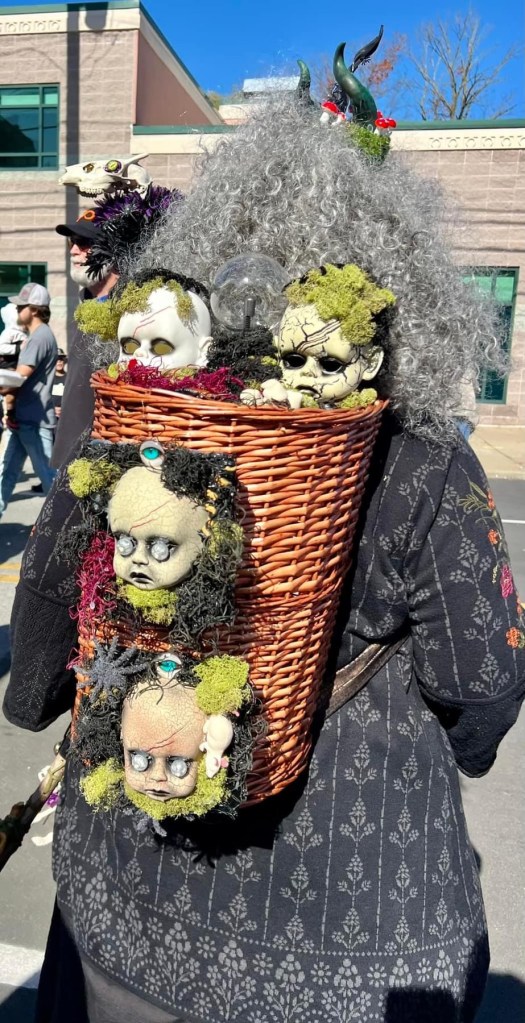
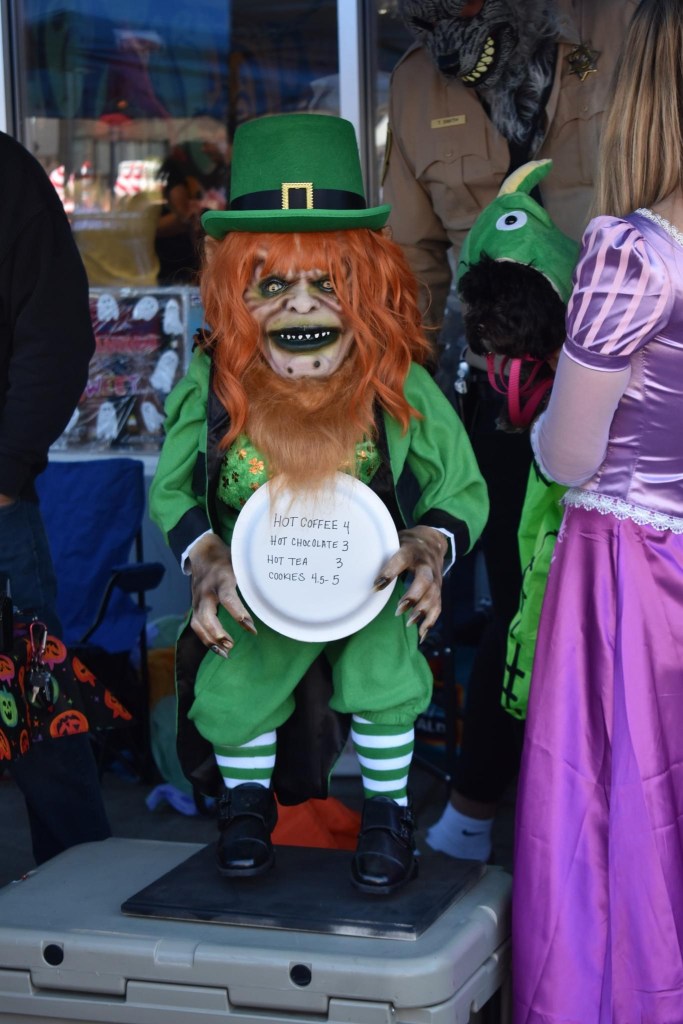
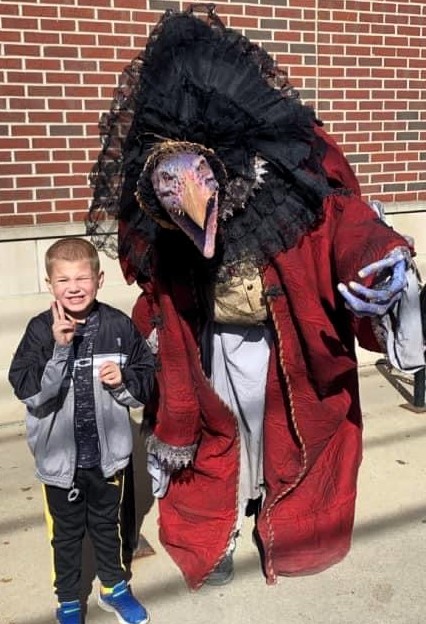
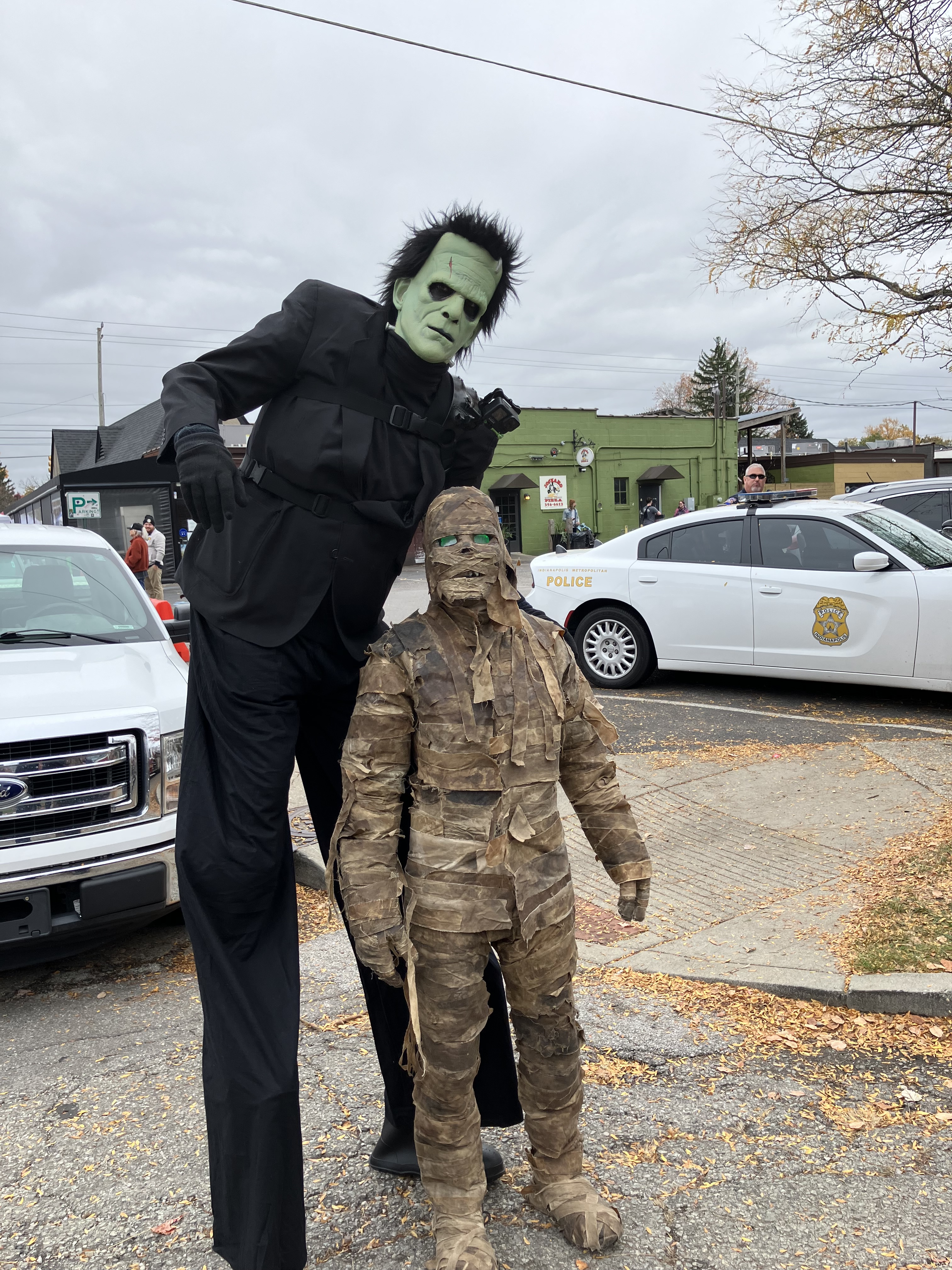
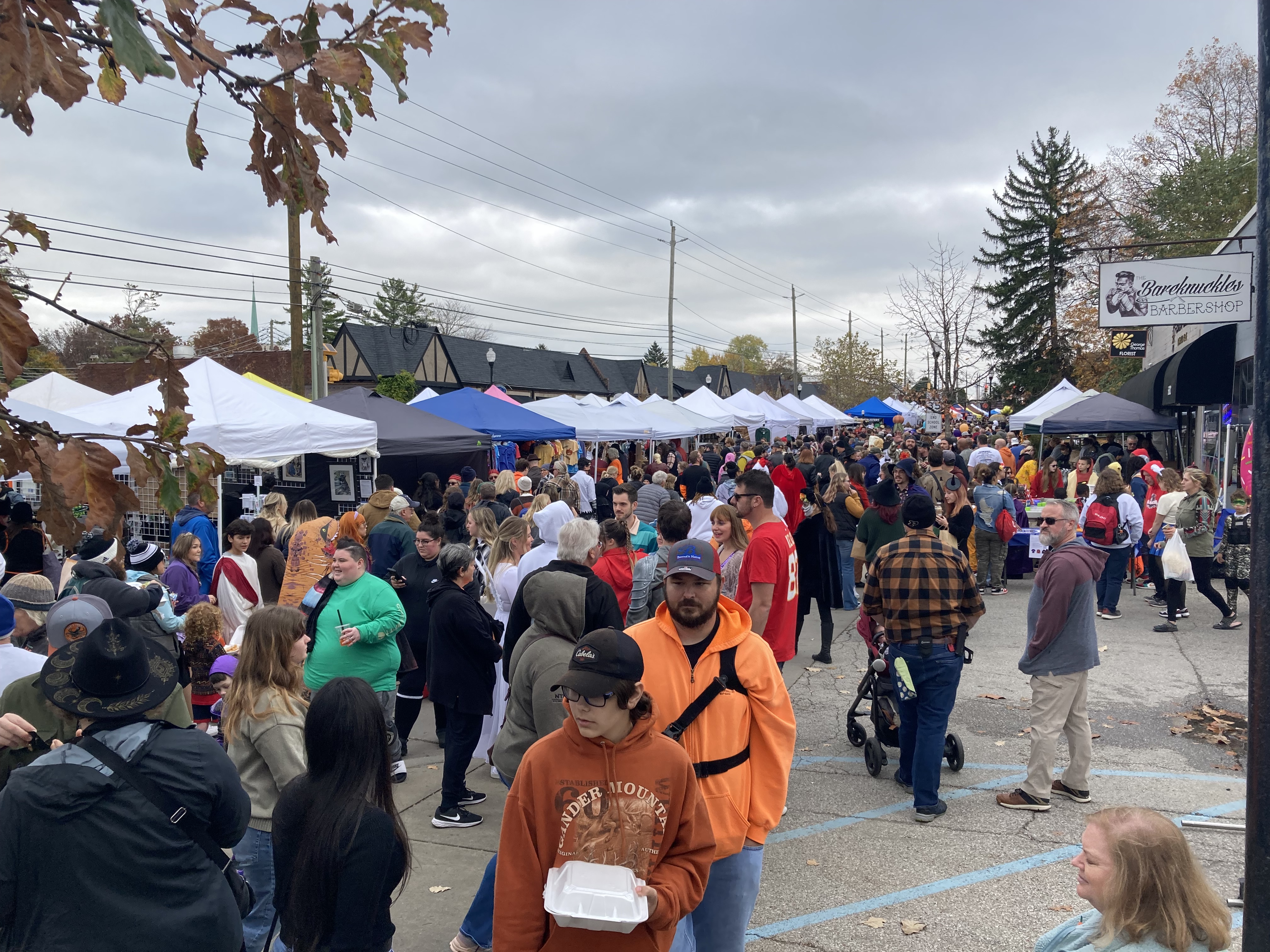
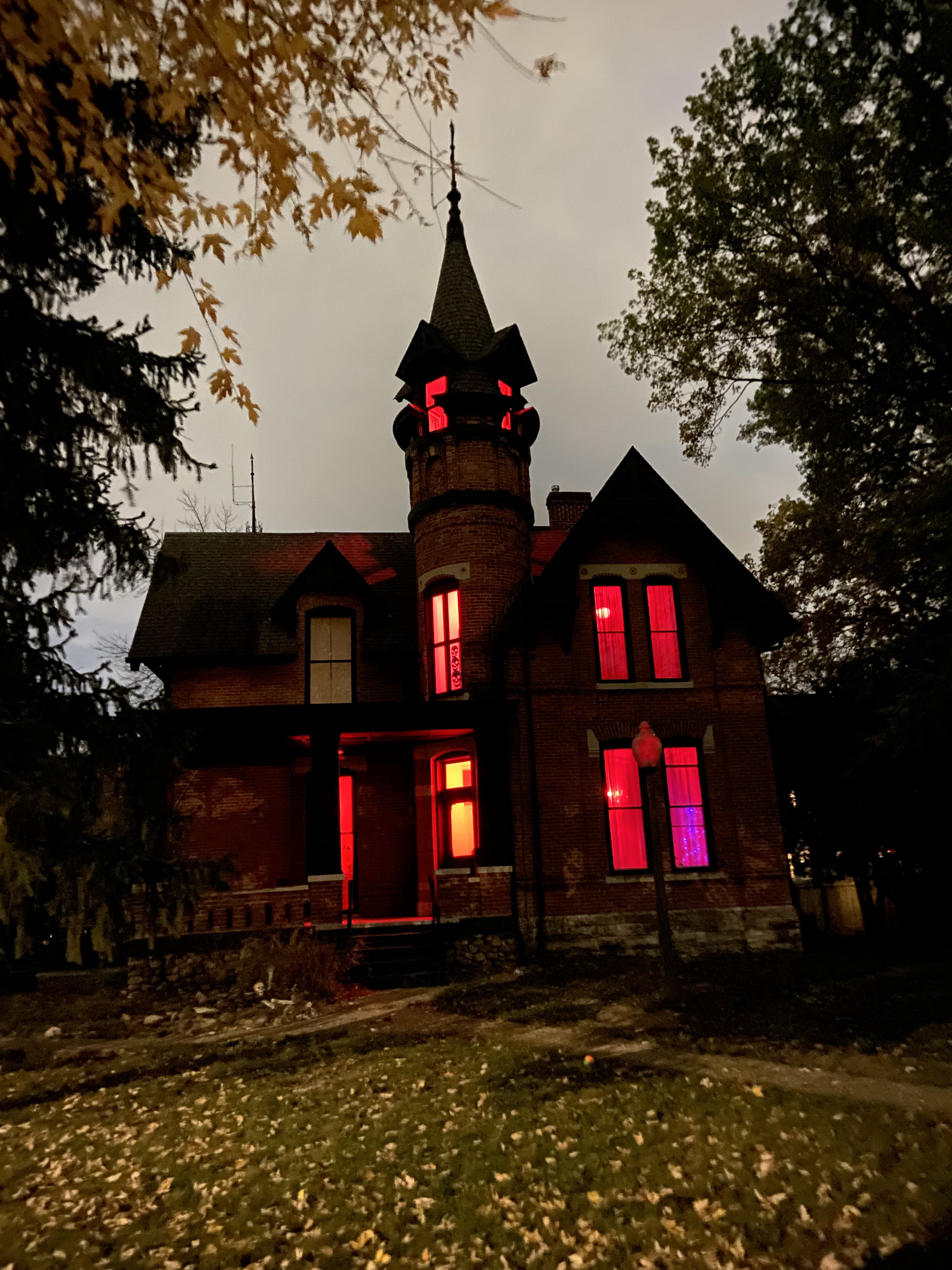
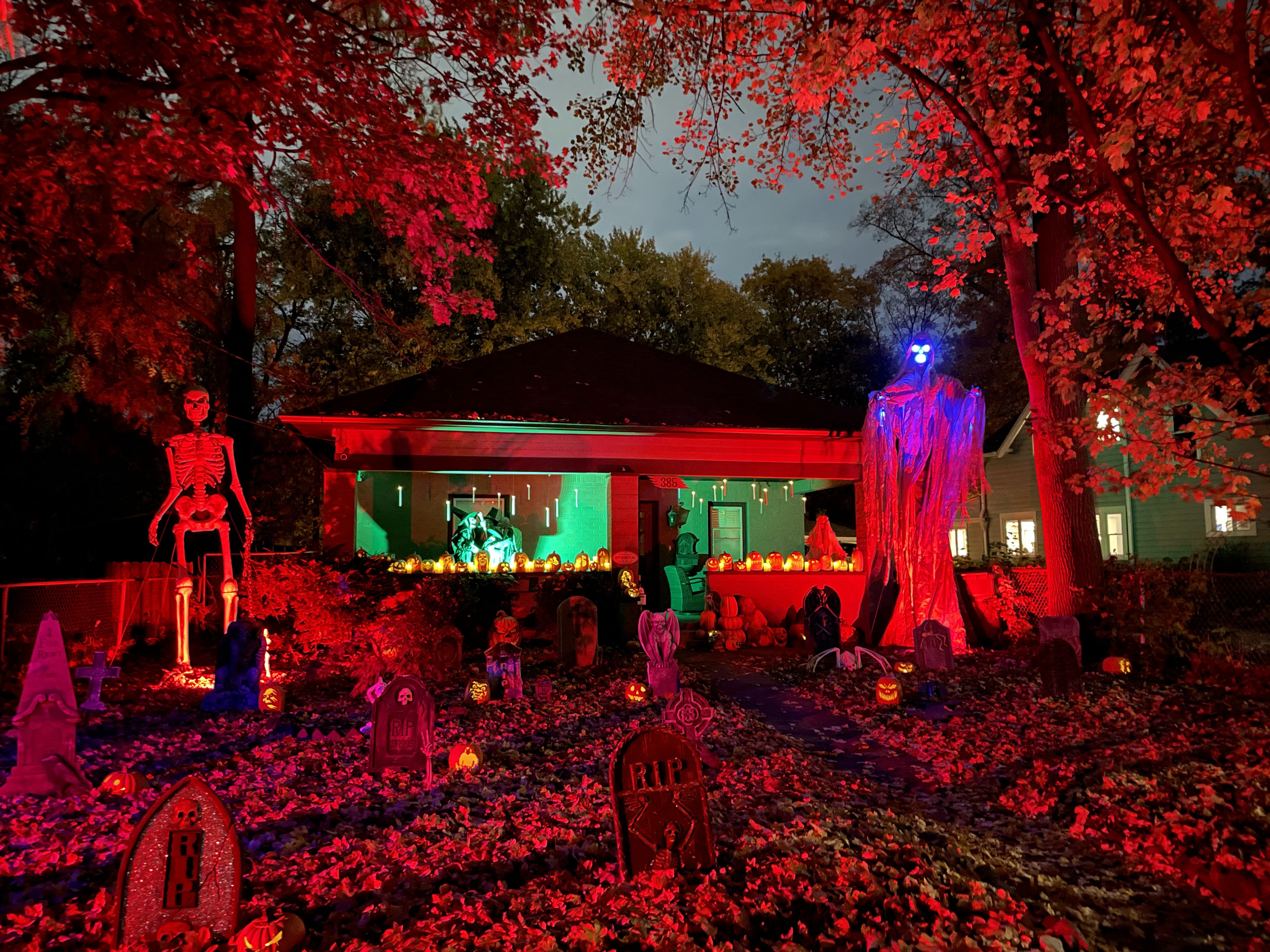
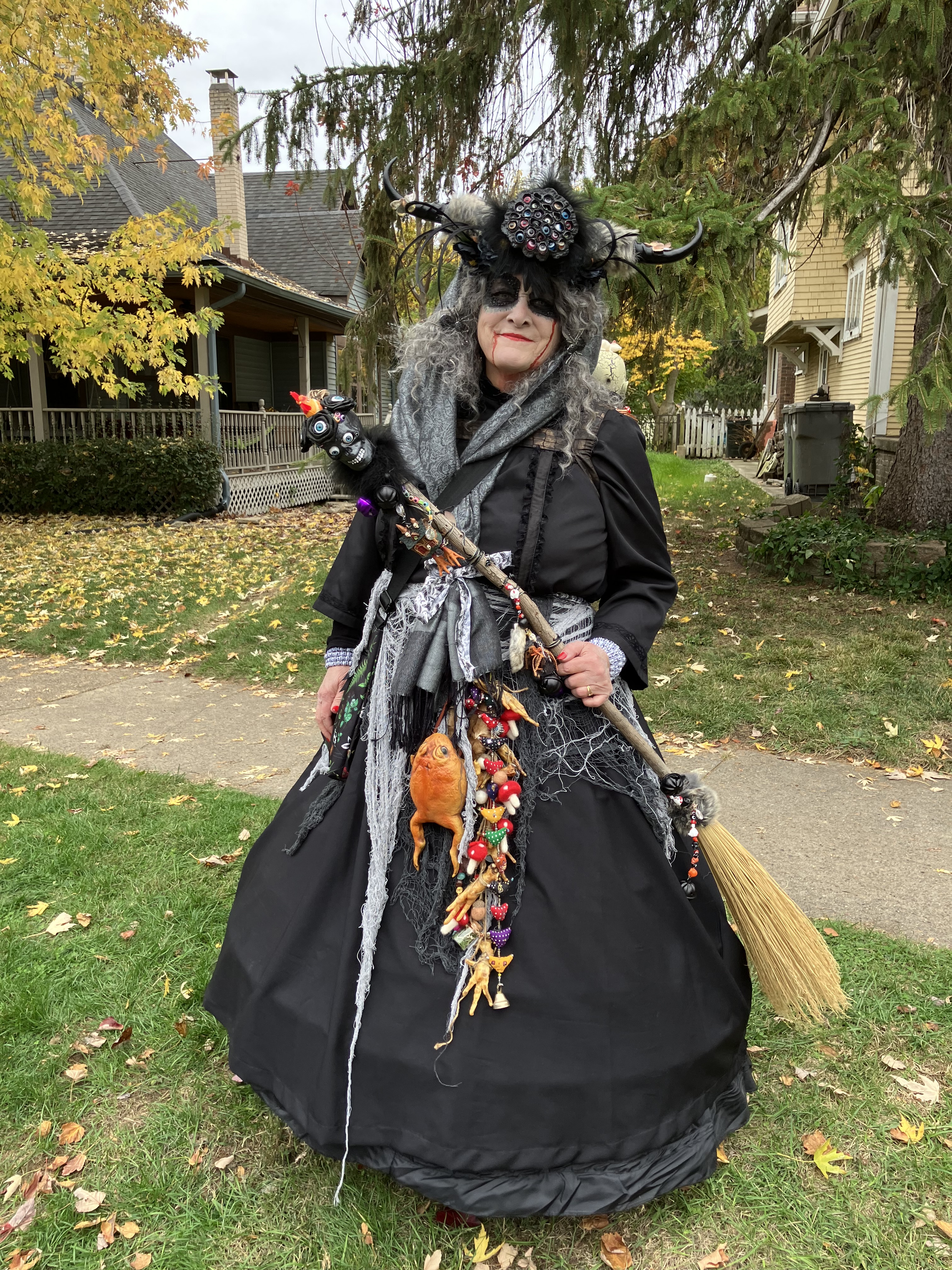
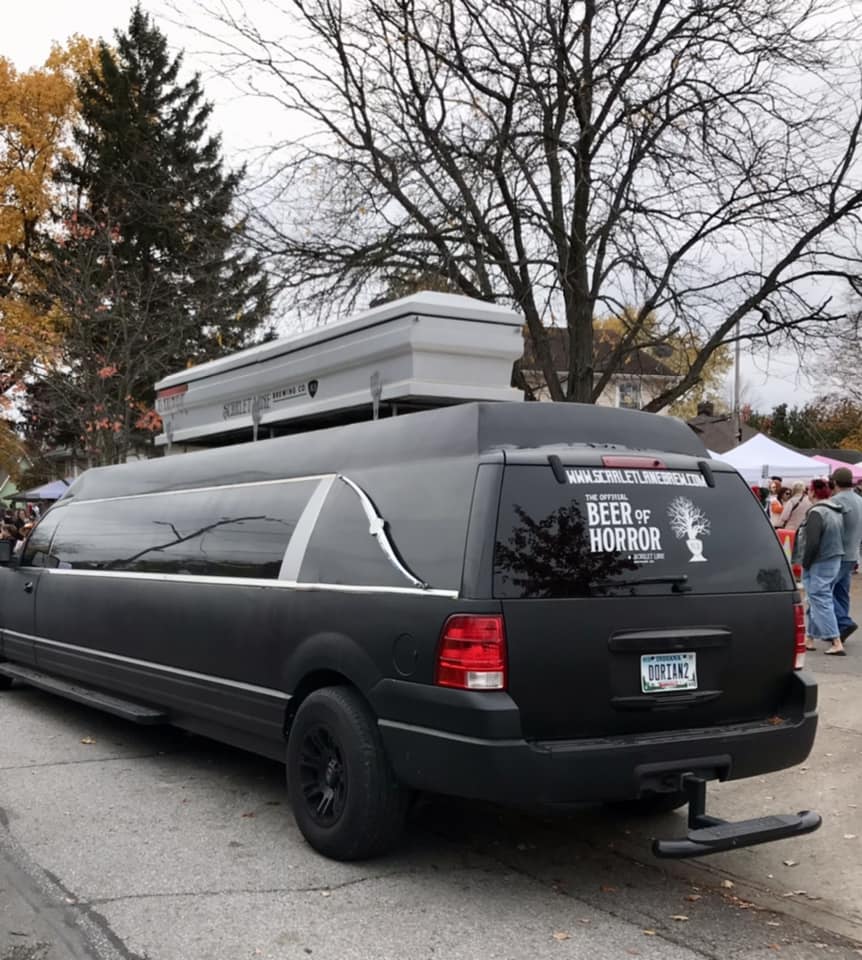
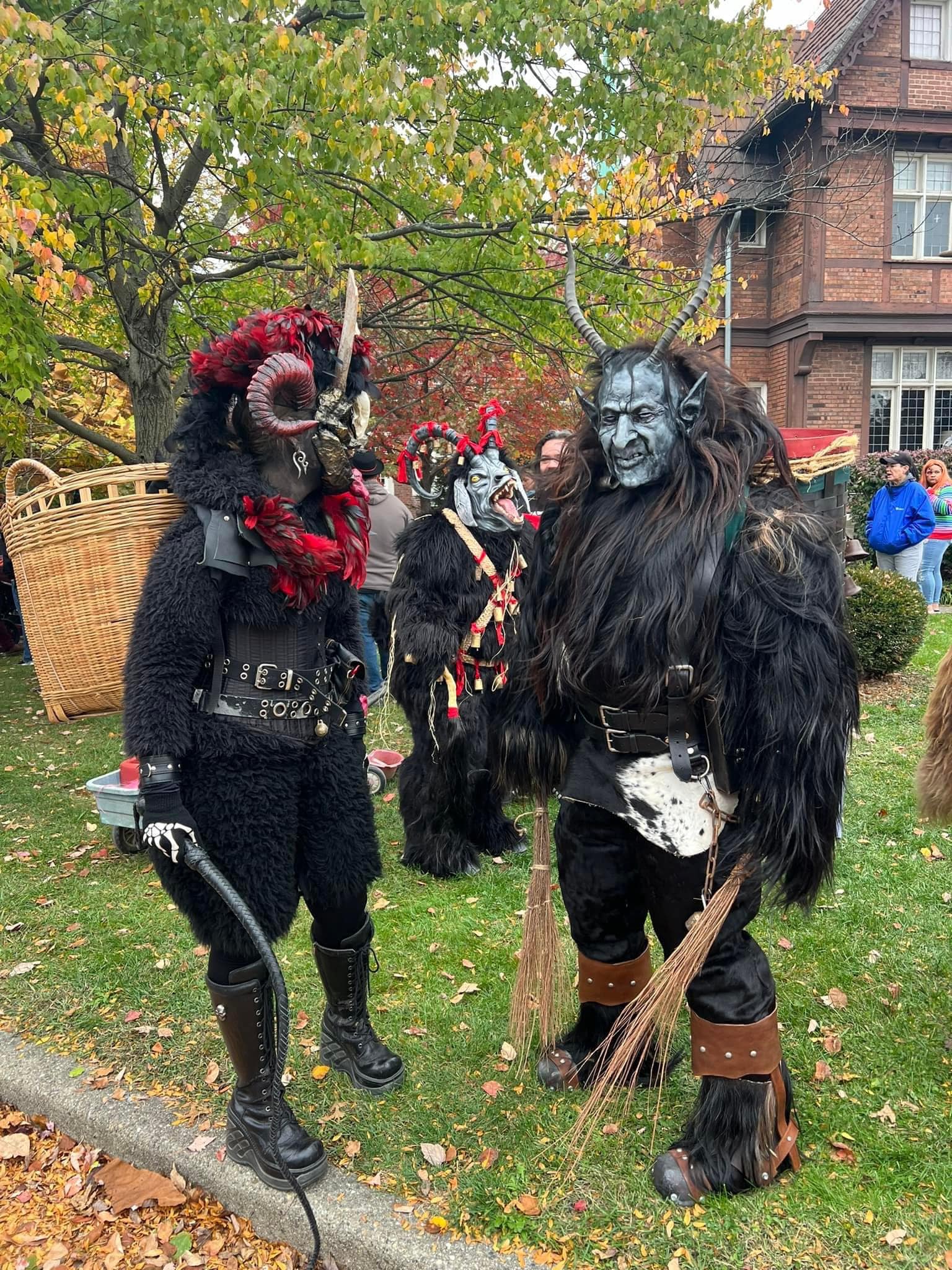
Halloween 2024 at the Historic Irvington Halloween Festival

I’ve mentioned before that my other great lifelong love outside of TTRPGs has always been Halloween. As a child I loved the chance to dress up and pretend to be different characters. During my senior year of high school in 1988 I volunteered at the Cobblestone Arts Center Haunted House, in Rochester, NY. It was during this time that I learned to walk on stilts and have portrayed a 9′ version of Frankenstein’s monster for every year since.

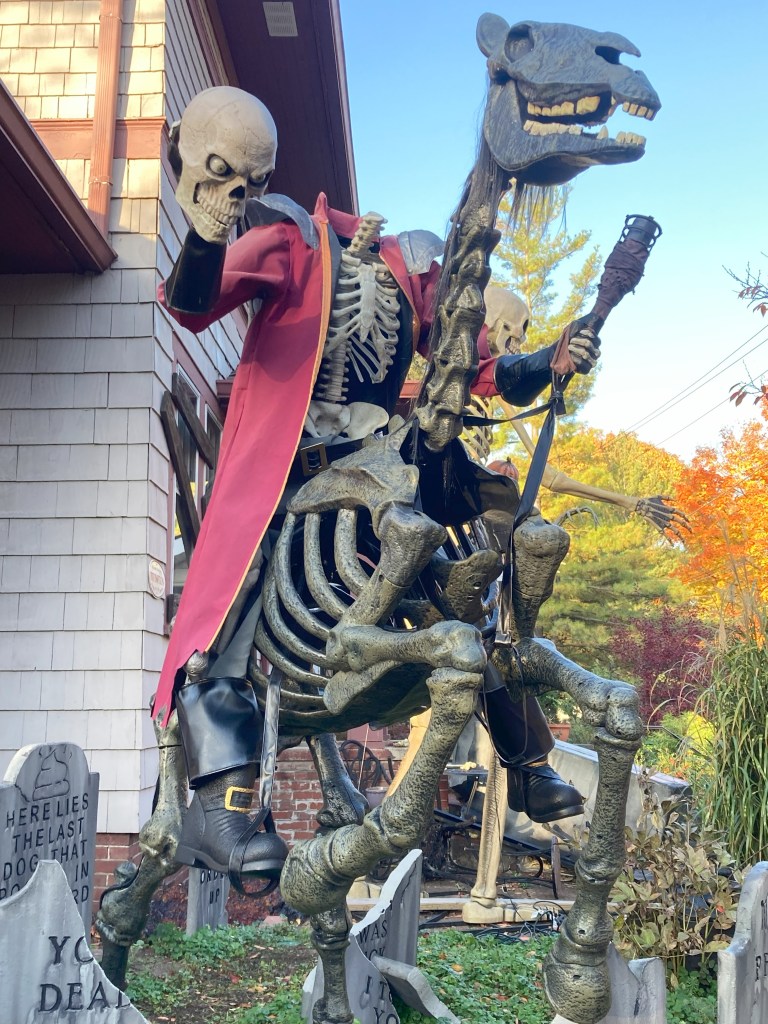
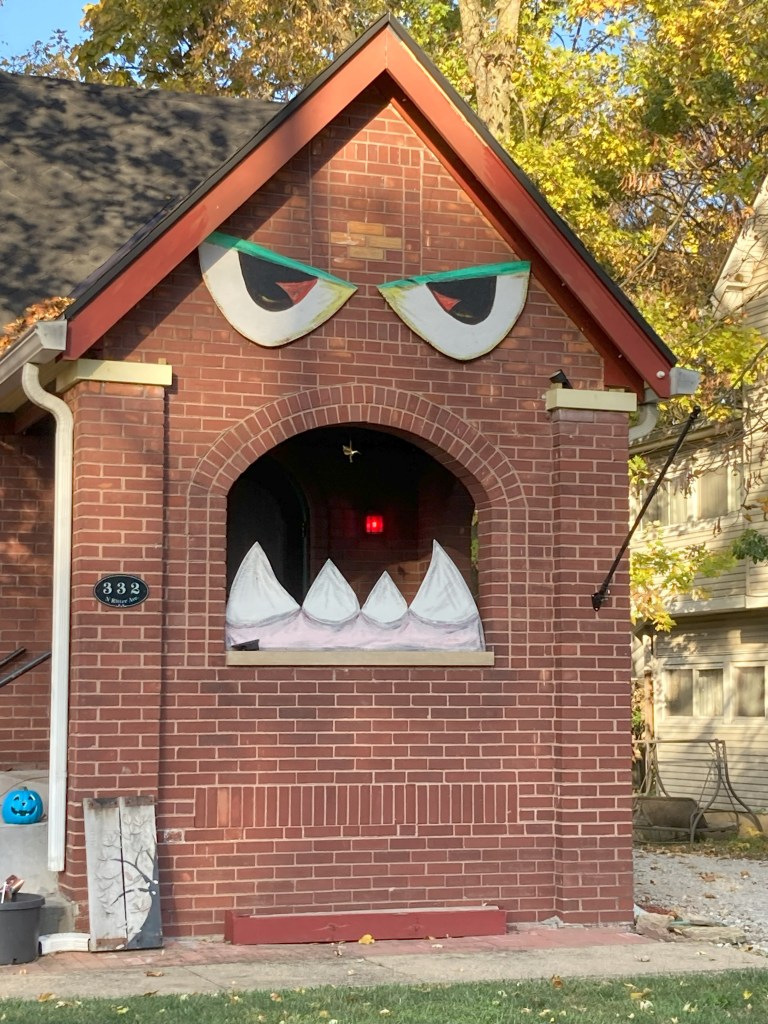
While the crazy bar parties are behind me, I still manage to find an event to haunt every year. This year I was lucky enough to return to the Historic Irvington Halloween Festival in Indianapolis, Indiana. Named after Washington Irving, of The Legend of Sleepy Hollow fame, Irvington is a wonderful Halloween destination. The neighborhood has hosted the Halloween festival every year since 1947. The residents do an amazing job decorating and there are events throughout October leading up to the street festival itself. I’ll be back to regular posting next week but in the meantime, enjoy some spooky pictures.

Vintage Ads From White Dwarf Magazine #64

This week I’m back with some more vintage ads. I’m turning to the pages of White Dwarf magazine. Issue #64 features cover art by Peter Andrew Jones and comes from April of 1985.

Launched in 1977 by Games Workshop, the company behind the Warhammer franchises, White Dwarf began as a general-purpose gaming magazine. Its early issues covered role-playing games, board games, and wargames. By the time this issue hit the stands in April 1985, White Dwarf had transitioned more towards supporting Games Workshop’s own products, though it still provided a wealth of content for the broader gaming community.

Growing up in the US during the 1980s, issues of White Dwarf were nowhere near as accessible as Dragon magazine (at least in Rochester, NY). However, I always tried to pick up a copy when I was able. A number of the monsters from the AD&D Fiend Folio had appeared previously in the pages of White Dwarf and somehow it just felt like a rare treat to get hold of one. At any rate, on with the ads:

Warhammer Fantasy Battle Rules

I don’t suppose I could showcase ads from an issue of White Dwarf with including at least on ad for a Warhammer product. Here we have an ad for the 2nd edition of Warhammer Fantasy Battles.

The boxed set includes three rule books—covering Combat, Battle Magic, and Battle Bestiary—along with character cards, a play sheet, and an introductory scenario titled “The Magnificent Sven.”

Outside of the occasional convention game I was never lucky enough to be exposed to Warhammer. The interest was there but my meager teenage funds wouldn’t have been sufficient to tackling buying and painting armies.

Talisman of Death

Next up is an ad for Talisman of Death, which was part of the Fighting Fantasy gamebook series by Steve Jackson and Ian Livingstone. This particular entry to the series invites readers to take on the latest challenge set in the once-peaceful world of Orb, where dark forces are working to unleash the evil power of the Dark Lord.

These made their way to the US, though to what degree I cannot say. In Rochester, NY I vividly recall finding a copy of The Warlock of Firetop Mountain (I believe the first of the series). Unlike the “Endless Quest” series produced by TSR Hobbies and other “choose your own path” books, the Fighting Fantasy titles added actual die rolls to the experience. This further simulated playing and actual role-playing game and I found it to be much more engaging.

Star Trek III Starship Combat Game

I have no recollection of this product. As I’ve mentioned previously, while I was fascinated with various wargames, most of my experience in the 1980s was limited to tabletop role-playing games. While I do vividly remember Star Fleet Battles by Task Force Games, this one escapes me.

The ad promises a thrilling experience where you can outmaneuver enemies to achieve victory, hide in asteroid fields, lay traps with gravity mines, and engage in battles for the control of planets. It emphasizes allowing players to command the legendary USS Enterprise, Klingon battle cruisers, Romulan warships, or various other starships available in the game.

The most interesting part of the ad to me lies in the fine yellow print at the bottom. Apparently Games Workshop licensed this one from FASA to sell in the UK. They has previously held the official distribution rights to Dungeons & Dragons and other TSR products in the UK.

Earth Wood

Earth Wood was another play-by-mail (PBM) game. These are still a bit fascinating to me. This appears to have been a PBM wargame. In a game like this, players would submit a series of orders, then the gamemaster would make any appropriate rolls or checks to determine the outcome and send out results to the player(s) involved.

Reading through the description, I can really see how it would be easy to get drawn in to a game like this. I would love to hear from someone who actually played one of these back in the day, as the concept has always been very interesting to me.

The thing that really gets me with these is the per turn charge, in this case £1.50/turn. I can’t swear to it but I believe that would have been roughly $1.95/turn back in 1985. It certainly would have been too rich for my blood back then.

The Chaos of Doom

This advertisement is for The Chasm of Doom which was apparently a book in the “Lone Wolf” solo role-playing adventure series. I’ve never encountered these so please chime in if you have some experience with them. The product is described as a “unique and action-packed solo adventure”, so it appears that these would be something also the same lines as the popular Fighting Fantasy series I mentioned up above.

Apparently, players would take on the role of the “Lone Wolf” and proceed to tackle continuing adventures. The game boasts over 50 line drawings plus a full-color game map and action chart. Unlike the Fighting Fantasy series, these seem to emphasize that no dice are needed due to their “unique combat system”. Again, I’d be interested in hearing what the mechanic was.  

De Luxe Fantasy Puzzles

This ad caught my eye, not because it was a game or game-related product but rather because it struck me as odd to see a product like this being licensed by Games Workshop. Never having been a fan of puzzles, I initially though it odd that there was a product like this. However, a bit of investigation showed me that TSR was producing Dungeons & Dragons puzzles during this same time period. As a matter of fact (and even more odd to me), even Wizards of the Coast has produced jigsaw puzzles. I honestly never knew puzzles were so popular. Are you a puzzle person?

Conclusion

That’ll do it for this week. Have you had any encounters with any of these products? Did reading through these bring back memories of any others? Leave me a note and let me know. In the meantime, stay warm and good gaming!

For maps & plot hooks, go here.

For my Idea Chest posts, go here.

For some random tables, go here.

Want to help me to compile a list of TTRPG conventions? Click here.

Finally, for a bit about me and some general stuff, this is the spot.
What Was Your Gateway to Adventure

This was an old TSR Hobbies catalog. I can’t recall whether this came packaged in my Holmes Basic set or in the later Moldvay set.

1977 had been a big year already, with the release of Star Wars during the past spring. The summer had been spent running around the neighborhood, shooting imaginary Storm Troopers, and debating the fate of Darth Vader.

It was around Thanksgiving when I became aware of a new animated TV Special. The Hobbit was coming to television. Now, for those of you much younger than I, you must understand that the late 70s were a much different time. We had cartoons every Saturday morning, without fail. However, aside from the annual Charlie Brown specials and perhaps Rudolph the Red-Nosed Reindeer, animated specials were almost unheard of. If you are too young to have lived through this, it’s hard to describe just how odd this was to see on network tv.

Rumors had spread through my school like wildfire. The Hobbit was something totally different. Not only was this a new animated special, but it was a story of wizards, dwarves, elves, and even a dragon! Truly, this was something not to be missed.

I don’t recall what I did wrong. Perhaps I had knocked the gravy over and into my Aunt’s lap during Thanksgiving dinner. At any rate, as luck would have it, I found myself quite grounded for the world television premier of The Hobbit.  It was devastating. I was certain that quite possibly; nothing good could come of my life from that day forward. You see, in 1977, there was no streaming, no DVRs (or VCRs for that matter). As a matter of fact, there was a great likelihood that if you missed a show on TV or even a movie in the theater, that you may never have an opportunity to see it again.

During the following week, I was forced to listen to my young friends tells stories about The Hobbit.  They would go on and on about the goblins, the spiders, and even some strange thing that they referred to as “Gollum”.  I was devastated. Within the span of one year, I had been told that I was too young to have a poster of Farrah Fawcett and now I had missed The Hobbit.

This was the cover to my first version of The Hobbit in the late 1970s.

During the fall of 1978. I came home from school one day to find a paperback book lying on my bed. It was The Hobbit; my parents had purchased me a copy of the novel. While it was certainly quite a bit larger than any book I had read thus far, I was intrigued by the maps and “strange writing” which I found just inside the front cover. I set about reading it right away.

I was hooked immediately. Shortly after finishing The Hobbit, I moved on to the Lord of the Rings trilogy. By the time that these were all finished I was a fantasy junkie, devouring any new novels that I could land my hands on. As I recall, the next up were the Lancer/Ace Conan series with the striking Frank Frazetta covers.

It was some time after that when I heard a couple of my friends talking about some new game. They had been playing this game, with the older kids who lived on the next road over. The details were sketchy but apparently there were hobbits and goblins in it and it was different from any of type of game.

The Holmes Basic D&D boxed set.

The whole thing was terribly confusing and made no sense to me at all. When I asked them about the board, they said there was no board. When I asked if there were cards, they said there were no cards. I was a skeptic, to say the least. Certainly, if a game like this existed, it would have to be listed within the pages of the J.C. Penney Christmas catalog (everything worth having as a child was.) It was not.

Then, one day, my friend and I happened to accompany my mother on a trip to Scrantom’s (a local card & stationary store in Rochester, NY). As we were checking out, I saw a curious looking box, sitting behind the counter. The box was adorned with a picture of a large dragon, sitting on a huge pile of treasure. The words “Dungeons & Dragons” were printed across the top of the box. A look to my buddy confirmed that this was the game he’d been trying to tell me about.

I received that very box for my birthday (this was the Holmes edition Dungeons & Dragons Basic set.) Like a blind man who has never seen, I immediately understood about games without boards. Suddenly, I had the ability to do more than just read fantasy stories; I could create them and watch them unfold before my eyes. The years to follow were filled with all kinds of great gaming memories.

Conclusion

That was how I was introduced to the hobby. However, sticking true to the title of this post, I’m curious about you. What was your gateway to adventure? When were you first exposed to the hobby and what was your first game? I’ve always loved hearing these type of origin stories and I find it fascinating to read about. Drop a comment below and let me know.

That’s all for now. Have a great week and thank you for stopping by. Good gaming!

For maps & plot hooks, go here.

For my Idea Chest posts, go here.

For some random tables, go here.

Want to help me to compile a list of TTRPG conventions? Click here.

Finally, for a bit about me and some general stuff, this is the spot.

Vintage Ads From Dragon Magazine #83

This week I’m back with some more vintage ads from the pages of Dragon magazine. This week I’m looking at issue #83, from March of 1984 and featuring cover art by Denis Beauvais.

As I’ve previously mentioned, unless you happened to live in close proximity to a local gaming store, it was likely that you would have never been exposed to many of these products. However, by 1984 Dragon Magazine could readily be found on the shelves of Waldenbooks or B. Dalton locations in almost any suburban mall. This helped to spread the word of diverse offerings in the TTRPG market to more casual fans.

Atlantean War Mastodon

Kicking things off is this striking mini from Ral Partha Enterprises. Ral Partha was a prominent manufacturer of miniatures for TTRPGS and wargames at the time.  This ad showcases the company’s new additions to their range of fantasy miniatures.

It’s not really clear whether the Atlantean War Mastodon was intended for TTRPGs or fantasy wargaming, though I suppose it may have found a home with either. I’ve always been fascinated with the whole wargaming scene but I’ve never had the time (or money) to take a deep dive into the hobby. I will say that back during this time period, it was common to see all manner of miniature wargames represented even at local gaming conventions.

The miniatures of the time were typically made of metal (often lead or a lead alloy) and were sculpted at a scale compatible with most RPGs (often 25mm, as specified in the ad).

Witch Hunt

Next up we have an ad for an RPG titled Witch Hunt, which supposedly allowed players to take on the role of either magistrates or witches (presumably with access to real magic) during the Salem Witch Trials.

I have no recollection of this game or the publisher StatCom Simulations Inc. However, I found some interesting information about it over at Wayne’s Books. If you’re not familiar with his site, it’s worth a look, especially if you like peeking back at some of these old titles.

The main reason I chose to include this ad in particular was to point out what a diverse selection of games were being churned out in the 1980s. There’s just something magical to me when I think about all of these people (at a time when very few people even owned a home computer) creating these games and throwing their hats into the ring.

Villains & Vigilantes  

Of the ads I’ve selected for this post, Villains & Vigilantes probably saw the most mainstream success. It was also the only one of these products that I happened to own at the time. Designed by Jack Herman and Jeff Dee and published by Fantasy Games Unlimited, V&V was one of the earliest TTRPGS to tap into the superhero genre.

As you might expect, the game prompted characters to create their own heroes to adventure with, using easily recognizable powers. The game was available as a boxed set, which included an introductory adventure, a reference screen, and dice. The game stuck around for quite a while and was supported with a number of adventure modules and at least a couple “rogues gallery”-type publications featuring colorful NPCs for use with the game.

As a teen, I was immediately drawn to the Jeff Dee art in all of the products. Jeff also provided art for a number of D&D and AD&D products during this time period.

DM’s Records

Again, just adding this one because I love the entrepreneurial spirit of it all. Here we have an ad for various “DM’s Records” for monster, spell, and party stats, as well as a time record sheet. These were almost certainly created for D&D or AD&D and churned out there, in hopes of them catching on. I love looking back and seeing stuff like this. I hope they sold a bunch.

Game Master

This period of the 1980s saw one of the first big influxes of home computing. While still not commonplace in every household, owning a computer was certainly something that was becoming popular. As you might expect, the crossover between home computer users and TTRPG hobbyists was considerable. Even a couple years prior to this I can recall sitting in a Radio Shack with my buddies and gleefully generating random d20 rolls on a TRS-80. Game Master, the product featured in this ad, was an early application for managing your D&D game.

Conclusion

That’ll do it for this week. Covid knocked me out last week, so I needed to get myself back into the saddle. Have you had any encounters with any of these products? Did reading through these bring back memories of any others? Leave me a note and let me know. Thanks for taking the time to visit. In the meantime, stay warm and good gaming!

For maps & plot hooks, go here.

For my Idea Chest posts, go here.

For some random tables, go here.

Want to help me to compile a list of TTRPG conventions? Click here.

Finally, for a bit about me and some general stuff, this is the spot.
Have You Ever Used a Real-World Map for Your Campaign?

If you have visited my blog previously, it’s probably fairly obvious that I fall into the camp of those who enjoy tinkering around with maps. I spend far more time creating maps and adventures than I do actually playing. To me, it’s another part of the hobby that I find very rewarding. However, I realize that some people don’t enjoy it and others simply don’t have that kind of time to spend on prep.

For those of you who may be short on time or inspiration, one little trick we would use back in the day was to use a real-world map as a template for some or all of your campaign map. It’s a resource that’s versatile and can be adapted with minimal effort for a variety of settings.

My friend Mike used this park map for years to represent the western portion of his campaign setting.

For instance, I grew up in upstate New York and my family would frequently vacation in the Adirondack mountains. Back in the early 1980s when I first got heavily into role-playing games, there were always paper road maps lying around. These mundane maps became the campaign setting for my high school AD&D group. Oh, I made the scale larger and changed most of the names. However, it provided me would a workable map on a very limited budget. A few years later, my friend Mike used a map of Mount Desert Island in Maine for the western side of his Fantasy Hero campaign. 

These days there are quite a few resources out there, allowing people to easily craft their own maps. However, real-world maps can still be useful. The geological features in our world have been crafted by eons of history. If you are wanting to create your own map but time is precious, maps from our world can be a great place to start. Simply choose an appropriate area, trim a bit here and there, and you’ll be on your way with geography that makes sense. Using a little artistic license, it’s relatively easy to take a real-world map and sprinkle in some fantasy elements where you see fit. A mysterious forest here, an ancient ruin there, and before you know it, you have a living, breathing world that your players can explore.

Years later I recreated Mike’s campaign world in Campaign Cartographer. As you see, the western third of the map is simply Mount Desert Island.

It occurs to me that since returning to the hobby I haven’t been exposed to much other than my own games. I’m curious to hear what is common for other game masters. Do you lean toward using published campaign settings? Do you run your games in your own world and create your own maps? Alternately, do you tend to leave the overland stuff a bit more abstract and only focus on adventures and encounters?

That’s all for now. Thank you for stopping by and I hope you have a great week. Good gaming!

For more maps & plot hooks, go here.

For my Idea Chest posts, go here.

For some random tables, go here.

Want to help me to compile a list of TTRPG conventions? Click here. Finally, for a bit about me and some general stuff, this is the spot.

Halloween 2023 at the Historic Irvington Halloween Festival

My other great lifelong love outside of TTRPGs has always been Halloween. As a child I loved the chance to dress up and pretend to be different characters. During my senior year of high school I volunteered at the Cobblestone Arts Center Haunted House, in Rochester, NY. It was during this time that I learned to walk on stilts and have portrayed a 9′ version of Frankenstein’s monster for every year since.

This year we were lucky enough to get some friends together and head up to the Historic Irvington Halloween Festival in Indianapolis. I’ll be back to regular posting next week but in the meantime, enjoy some spooky pictures.

Do You Incorporate Halloween Into Your Game Night?

Pizza Skulls

Halloween has always held a special place in my heart. As a child, it was a time of magic, when dressing up in costumes transformed me into anything I could imagine. Growing up in the 1970s, I can recall donning the guise of a pirate, a gorilla from The Plant of the Apes, and a Sleestak, all before the age of 7.

Those early years of pretend play laid the foundation for a lifelong love of storytelling. As I started reading books, my imagination grew, and when I was introduced to tabletop role-playing games everything truly blossomed.

With the leaves starting to change, my thoughts are turning to Halloween. I love to incorporate the spooky season into my game night, so I thought I share some things I have done in the past. I am going to share some links but only to provide examples. I am in no way affiliated with any of these sites.

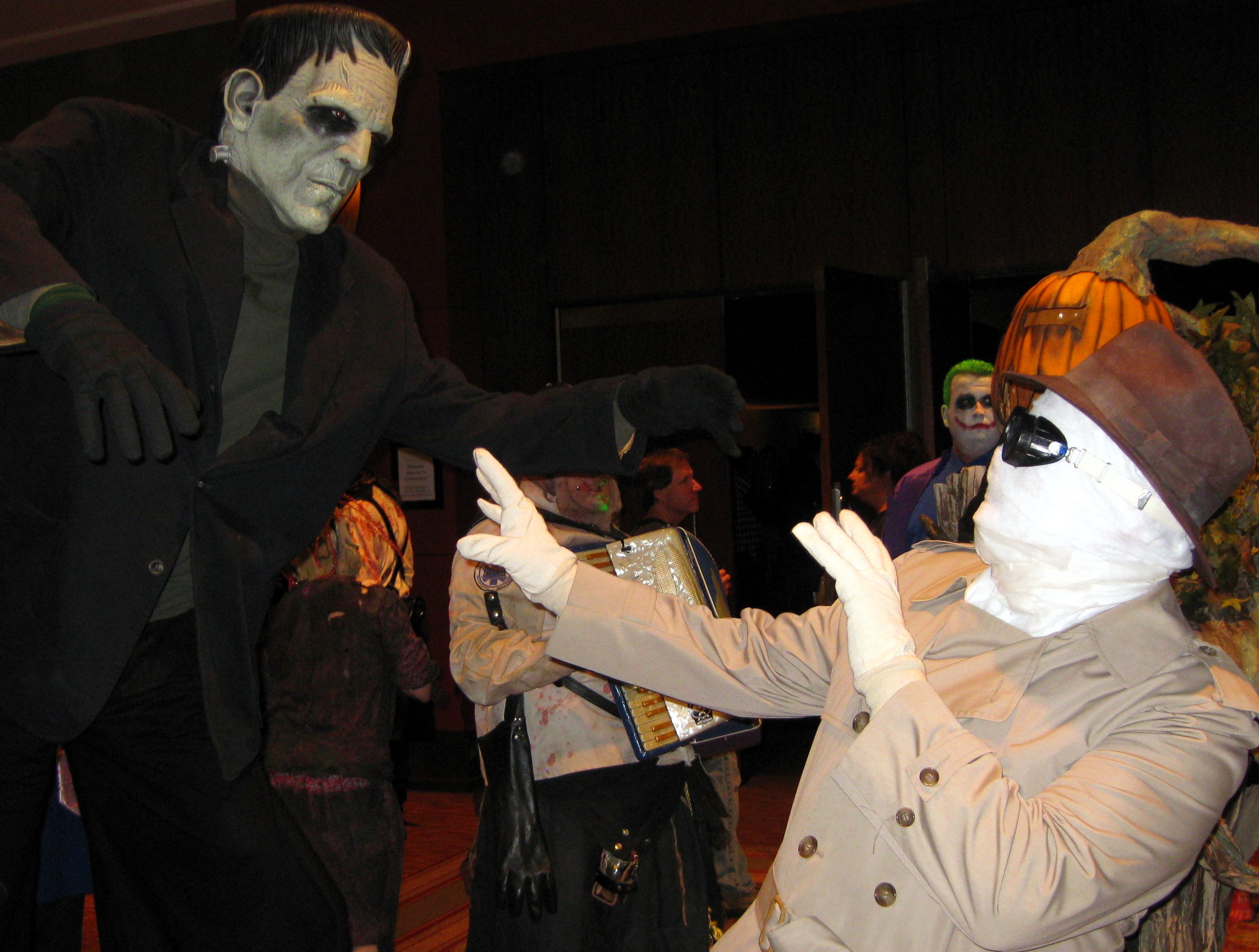
Squaring off with the Invisible Man at the Midwest Haunter’s Convention 2012.

Set the Stage

It doesn’t take much to make your gaming space take on a spooky appearance. Simply dimming the lights, lightning a few candles, and playing some ambient Halloween music can go a long way. To take things a step further, some basic decorations can usually be found without making too great of an investment. For overachievers, consider asking each of your players to bring a carved jack-o-lantern to the session.  

Perhaps Add Some Food

I have mentioned before that our game nights tend to be accompanied by a meal. Well, for our Halloween session we try to really turn things up a notch. Last year we paired these pizza skulls  with hot dog mummies and both were a big hit around the table.

We provided these cocktails, which we dubbed “Spooky Sunsets” for the occasion. For our friends who don’t drink, we whipped up a batch of this copycat Hi-C Ecto Cooler.

Too much bother? Simply buying a bag of Halloween candy and sprinkling it on your gaming table is sure to be a hit with your players.

Run A Spooky Game

Despite definitely getting together for a Halloween session, we often avoid our regular campaign for this night. Sometimes we’ll opt for a one-shot, while on other occasions we may roll with something other than an RPG. Here are a few examples that have fit the bill over the years.

  • I must have run the classic I6 Ravenloft at least a dozen times for Halloween related sessions since the 1980s. Here’s a link to a great video about turning this old standby into something fit for a single evening’s play.
This is a steal at $4 and if you’ve never tried Call of Cthulhu, you won’t find a better point of entry.
  • You’d be hard pressed to get much creepier than Call of Cthulhu. Even if you’ve never dipped a toe into this legendary game of Lovecraftian horror, you have plenty of time to prepare (and the price is right). Chaosium is offering the Call of Cthulhu 7th Edition Quick-Start Rules for whopping price of $.04 over on DriveThruRPG. Not only does this include everything needed to get up and running but it also includes the classic adventure The Haunting.

I ran The Haunting a couple years ago for a group that had never touched CoC and everyone was on the edge of their seat. If you do decide to go this route, I strongly suggest watching a couple videos ahead of time, to get a feel for how to best run the adventure. Here is a great example.

  • While not a traditional RPG, Alice is Missing might be a good fit. Alice Briarwood, a high school junior, has gone missing and it’s up to the players to get to the bottom of it. Alice Is Missing is a unique kind of roleplaying game in which players only communicate using their phones, sending text messages to each other as they unearth clues about what happened to Alice.

While I’m told this can be played online, we played in person and that seemed to really ratchet up the tension. This one can get a little heavy, so it may be best to play with folks you know well. We had a good time with it and it lead to a lot of good conversation after the session.

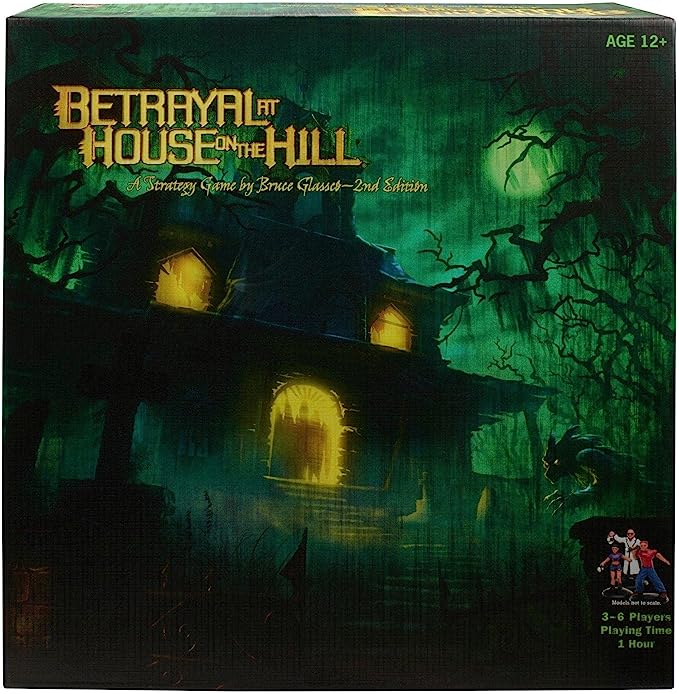
  • Occasionally we’ll forego playing a RPG altogether and opt for enjoying a board game for the evening. There are a number that fit the bill but we’ve found that Betrayal at House on the Hill and Mysterium both work nicely.

Add Some Spooky Elements to Your Ongoing Campaign

It’s certainly possible that you want to roll right along with your ongoing game while still giving things a little touch of Halloween. If that’s the case, I’ll try to lend a hand. For the rest of the month, I will focus my posts on maps and little plot hooks that should be easy to fit into an existing campaign. I’ll do my best to help spread a little Halloween cheer that you can share with your players.

Closing

So, do You Incorporate Halloween Into Your Game Night? If so, please take a moment and leave a comment to let me know what you do with your group. I’m always curious to pick up some new suggestions.

While I’ve got you, do you recall any favorite Halloween costumes from your youth (or more recently)? I’m a stilt-walker in my spare time and have spent the past 35 years as a 9’ tall version of Frankenstein’s monster.

That’s all for now. Thanks for taking the time to stop by and have a great week.

For information about the Village of Cross Tree, go here.

For maps & plot hooks, go here.

For my Idea Chest posts, go here.

For some random tables, go here.

Finally, for a bit about me and some general stuff, this is the spot.

Mulling Over a New Campaign

For the past couple of weeks, I have been preparing for a new game. In recent years, I have found that running a campaign from the months of October through March or April generally yields good results. I only play in person and we live in a college-town, so there are usually a good number of folks available, looking for something fun to do during the months when the weather is less than pleasant.

My girlfriend and I like to make game nights a real social event. Our sessions tend to be more like a dinner party followed by some gaming. We both love to cook, so when we’re really on our game, we will go as far as to try to make themed dishes based on what happens to be going on with the game. If any of you play in person, do you have any special game night traditions? Do you have better luck finding players for winter games?

The current front-runner for my cold-weather sessions would be a fantasy game, as it would appeal to the broadest spectrum of my potential players. That said, I’m feeling a bit of a draw to go with Call of Cthulhu or Paranoia. Assuming fantasy wins, I’ll likely go with Old School Essentials.

Lately, I’ve been following David @ Streets & Spores, who has been sharing recaps of his group’s adventures through Castle Xyntillan. It sounds like they’re having a really good time. While I’ve never run a megadungeon, I’m starting to warm up to the thought of taking an almost West Marches approach to the affair. We would aim to have the party safely back in town at the end of each session. From there, any available players would continue to explore the dungeon each week.

My Campaign Cartographer doodles this week consist of a potential first level for a homebrewed megadungeon adventure tentatively titled “The Halls of Khared Ordus.” That said, I’m thinking I’ll let this simmer for a while. If I do go with the megadungeon route, I’m thinking I might just buy a published adventure and just have fun with it.

Closing

How about you? Do you lean towards writing your own adventures or prefer published modules or adventure paths? If you’ve experienced megadungeons before, do you have a favorite?

That’s all for now. No plot hooks this week, as my real-life job is using me as a chew toy. Thank you very much for stopping by. Have a great week and if you’re looking for more, here are some links:

For more maps & plot hooks, go here.

For some random tables, go here.

Finally, for a bit about me and some general stuff, this is the spot.
RPGA Network Member Directory

Today I want to share something from my collection that goes back 40 years. This simple booklet is the 1983 RPGA Network Member Directory.

To my recollection, this was the only version of the directory ever printed.

The TSR RPGA (Role-Playing Gamers Association) was an organization for tabletop role-playing enthusiasts, established by TSR, Inc., the company who made the Dungeons & Dragons (D&D) game. Founded in 1980, it aimed to bring together gamers from around the world, providing them with a shared platform to connect. One of the RPGA’s primary functions was organizing and sanctioning gaming events, including conventions and tournaments, allowing members to enjoy structured, competitive play (this was a thing back then) while also fostering a sense of community within the RPG world.

Members of the RPGA received a subscription to the Polyhedron Newszine. This periodical publication offered content for role-playing enthusiasts. It featured articles on various gaming topics, including adventures, rules discussions, and interviews with prominent figures in the RPG community. Additionally, the Polyhedron Newszine often included exclusive game content, such as new adventures, magic items, and character options (not unlike a smaller version of Dragon Magazine).

Members could select the games that they were familiar with as both a player or referee (GM).

In later years, the RPGA rolled out the idea of a living campaign, where the actions of the players would have an impact on the overall campaign story arc. Their first campaign of this type was Living City, a series of adventures set in the city of Raven’s Bluff. I may be mistaken, as this was never my cup of tea, but I believe that this was the start of the concept of organized play. If you know otherwise, please leave me a note below.

With the history stuff out of the way, let me share a bit about this directory itself. A company could never do this kind of thing today but you have to remember that back in 1983 we were pre-internet and most folks didn’t even own a personal computer. The RPGA Member Directory was a comprehensive listing of RPGA members worldwide. This directory served as a tool for members seeking fellow gamers for local campaigns, conventions, or simply to connect with like-minded individuals who shared an interest in role-playing games. Members could use the directory to find fellow gamers in their region and organize gaming events. I used it myself to reach out to meet some local gamers in Rochester, as well as to start a play-by-mail game with some folks in NJ.

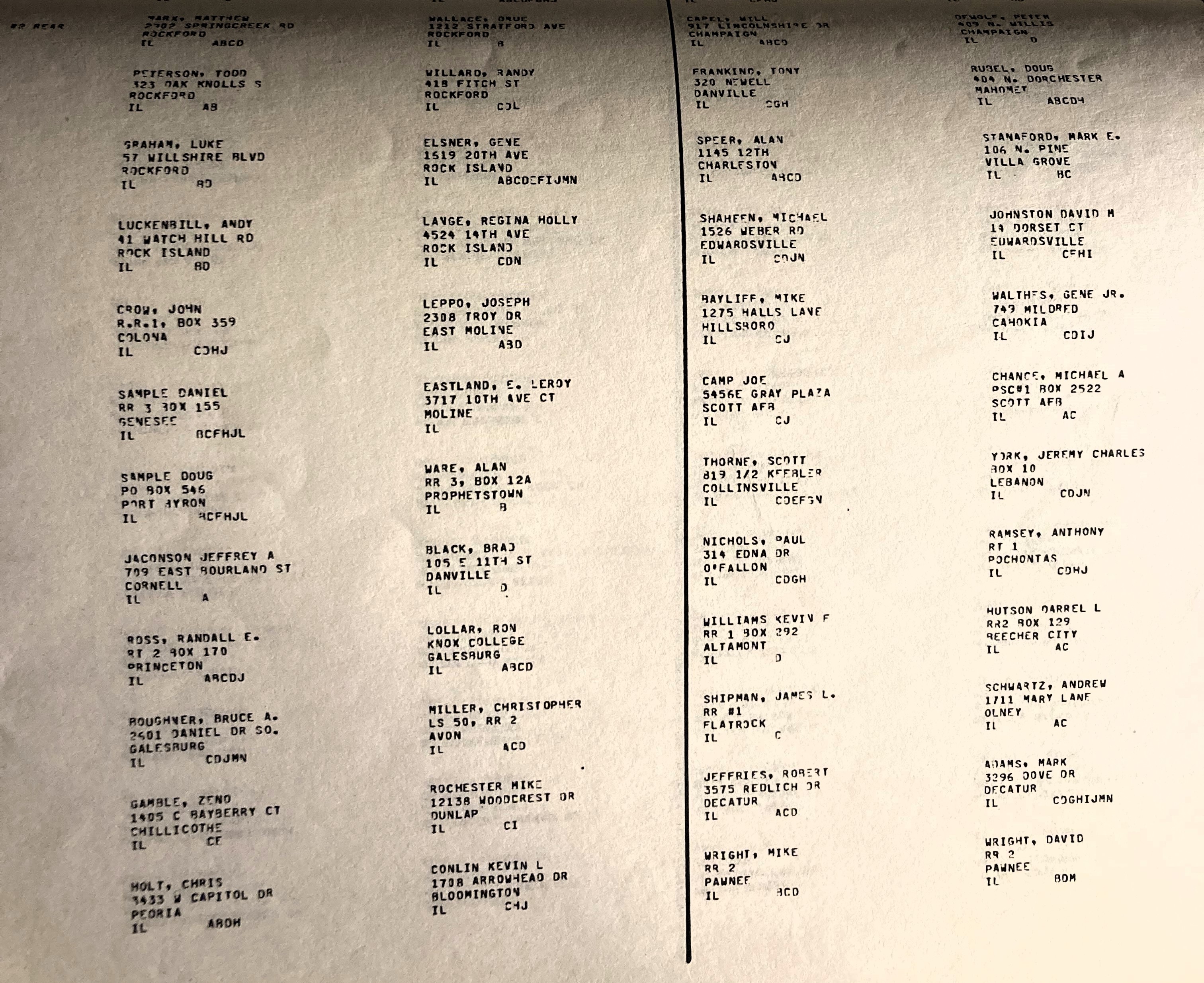
The bulk of the publication consisted of page after page of actual addresses.

That’s all for now. Just thought some of you might enjoy seeing this blast from the past.

Yesterday marked the end of my first year of blogging. I have found the endeavor to be quite rewarding, as I had been longing to interact with more people who enjoy this hobby of ours. If you have stopped by to say hello over the past year, I thank you for visiting.

For more maps & plot hooks, go here.

For some random tables, go here.

Finally, for a bit about me and some general stuff, this is the spot.

Consider Polling Your Players Before Creating Your Campaign

When I started this blog, I knew that I wanted to interact with people and that I wanted to create the type of content that I enjoy reading myself. Over the course of the past year, I’ve written a couple posts about how I go about running my games and each of these has performed quite well.

As with those, I’m not entirely sure that what I’m about to share will land with any of you. However, it’s something that I enjoy, so here we are. I believe I’ve been clear about this in the past but I’m not here to preach to you. I’m simply sharing things that I enjoy, in hopes that you will find something that is useful.

I reach out to my players before the dice ever start rolling. Artwork © 2015 Dean Spencer, used with permission. All rights reserved.
Dean Spencer

As a GM, sometimes you just know what you want to run. You just purchased a published adventure path or maybe you have a homemade campaign that you have been dying to share. However, on some occasions I find that the process of starting a new game is more about hooking the players.

I find myself in that boat fairly often. I am older guy (53 at the time of writing this) and solely play in-person games. My groups tend to consist of people who are already friends, or at least friends of friends. While these individuals are people I know, they are rarely gamers, or diehard gamers at any rate.

Some of my players join my game because we have played before, some briefly dabbled with TTRPGS back in college, and others have always been curious but have never been exposed to the hobby. Ok, probably a few of them also get dragged along by a spouse or significant other.

While I don’t want to sound desperate, I often feel a great deal of pressure to give the folks a good time. Nobody wants their players to feel like game night is a drag. However, there is also the fact that if I don’t have a group of players, I’m not going to be able to play myself.  

When I am ready to start a new game I get excited. I don’t know about you but I find that I start daydreaming about it while I’m at work, when I’m going to bed at night, and all through the day. At this point I will start “fishing” for players. I might start with an email to former players or this could take the form of floating out that fact I’m interested in getting a game together while at a dinner with friends. I’m actually going through this now, as I find that running from October – March or April (with a couple weeks of over the holidays) seems to yield reliable players.

Having discussed the impending game ahead of time, I like to reach out to my players via email and get a feel for them as I am putting a campaign together. This accomplishes two things; it helps me to get a sense of the type of game these people would enjoy but it also allows me the fun of seeing what kind of feedback I receive. I’ve found over the years that I really enjoy this step.

Usually, I will start by polling players on different fantasy franchises and how they feel about them. For instance, it might look something like this:

Following this I will often go back and hit them with another poll about types of plots. This just gives me a general sense of where the interests of my players lie. The second poll might look something like this:

I use the information that I receive from each of these to decide both what type of campaign I think would best suit them but also what kind of adventures I want to start with. I’m not claiming that it’s a magic formula but I have always found it useful. Again, the key fact here is that I ENJOY this. I find it very interesting to see the choices people make. When Bob from accounting is playing and you suspect he’s only playing because his wife dragged him into it, it’s pretty fun to see his responses come in during the middle of the work day and to also see that he added two pages of explanation. This is the stuff that GMs live for.

I may be odd but I don’t give a damn whether my players know the rules, buy a bunch of game books, or anything like that. That will all come with time. In my opinion, a role-playing game requires no more knowledge or skill than simply being able to convey how you would react, if you were an imaginary person, faced with an imaginary situation.

What I want is players who have fun and keep coming back. When I hear that on of my players who never played a TTRPG before drew up plans for assaulting the enemy stronghold during her staff meeting, I know I’ve won.

Wrap Up

That’s all for now. What about you? Do you usually play with people that you know or is it usually total strangers? Do you have any little rituals or traditions that you do before you start a new game? Please let me know in the comments and thank you for stopping by.

If you’d like to see my other posts about how I run my games, here are the links:

Consider a Who’s Who for Your Campaign

Consider Creating a Player’s Guide for Your Campaign World

For more maps & plot hooks, go here.

For some random tables, go here.

Finally, for a bit about me and some general stuff, this is the spot.